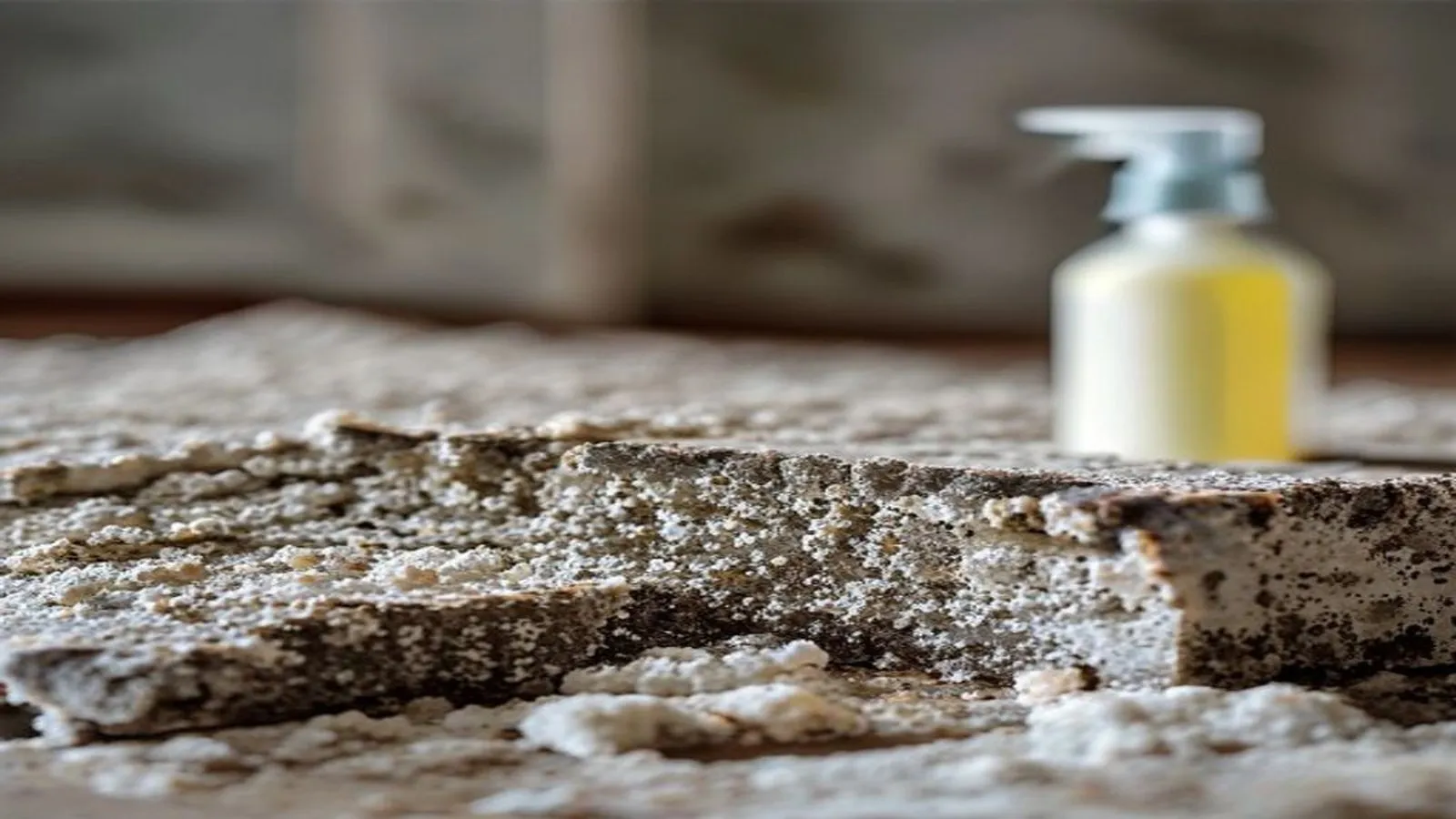
Walk into any hardware store in Missouri City and the recommended product for mold is a bleach-based cleaner. Walk into the EPA website and the recommendation is to avoid bleach for mold remediation. Walk onto an IICRC-certified job site and you will not see bleach used as the primary remediation tool. Three different recommendations for the same problem. Here is what is actually going on.
What mold does on porous materials
Surface mold on glass, sealed ceramic, metal, or hard plastic is easy. The mold sits on top of the surface and standard cleaners (including bleach) can reach all of it. Wipe down, done.
Porous materials are different. Drywall, unsealed wood, insulation, paper, and grout contain microscopic voids that mold colonizes by extending mycelium (the root-like structure) down into the material. Visible surface growth is only the part you can see. The mycelium can extend a quarter inch or more into the drywall, where chemical cleaners cannot reach without saturating the entire material.
Why bleach specifically falls short
Bleach (sodium hypochlorite) is a strong oxidizer that kills mold on surface contact. The problem is that bleach is mostly water (typical household bleach is 5 to 8 percent active chlorine in water). When applied to porous material, the water carries dissolved chlorine into the surface — but the chlorine evaporates or reacts quickly while the water continues deeper into the material. Result: you killed the surface mold and added moisture to the deeper colony, which then continues growing once the chlorine dissipates.
The EPA addressed this directly in its "Mold Remediation in Schools and Commercial Buildings" guidance. The agency specifically says routine bleach use is not recommended for porous-surface mold remediation. The IICRC S520 standard takes the same position.
The S520 alternative: physical removal
The IICRC S520 standard for professional mold remediation centers on physical removal rather than chemical kill. The reasoning is straightforward: dead mold is still allergenic. Mold spores from killed colonies still trigger respiratory symptoms in sensitive individuals. The goal is to remove the contaminated material from the building, not to leave it in place chemically treated.
Standard S520 approach:
- Contain the work area with 6-mil polyethylene barriers floor to ceiling.
- Set up HEPA negative-air filtration at minimum 4 air changes per hour, exhausted to outdoors where possible.
- Cut out and dispose all contaminated porous material (drywall, insulation, unsealed wood) as biohazard or bagged construction waste.
- HEPA vacuum all surfaces inside containment in two cross-directional passes.
- Apply EPA-registered antimicrobial to remaining structural surfaces (studs, exposed sheathing) for residual treatment.
- Run HEPA air scrubbing until particulate counts match outdoor reference levels.
- Post-remediation verification via visual inspection and optionally third-party clearance air sampling.
When bleach actually has a place
Bleach is appropriate on non-porous surfaces where mold has colonized only the surface — bathroom tile grout (which is somewhat porous but accepts bleach treatment), the inside of a refrigerator gasket, sealed ceramic, hard plastic shower curtains. For small surface mold on non-porous surfaces, EPA agrees that bleach or other antimicrobials can do the job.
The mistake is using bleach on visibly mold-affected drywall and assuming the problem is solved when the surface looks clean. The colony lives on inside the drywall, the moisture source typically still exists, and the visible mold returns in 30 to 90 days.
The moisture source is the real fix
Mold cannot grow without a moisture source. Properly executed remediation always identifies and corrects the source — a roof leak, a plumbing leak, a condensation point, a humidity problem. Skipping the moisture source diagnosis means the mold returns even if remediation was technically perfect. We include moisture-source identification in every mold inspection and write the correction into the scope.
For our full mold remediation approach, see our mold remediation page. For specific patterns we see in Sienna, where attic plumbing condensation is the most common source, see our blog post on hidden mold risk in Sienna attic plumbing runs.
Texas TDLR licensure for jobs over 25 square feet
Texas Department of Licensing and Regulation requires licensed remediation for any mold project covering more than 25 contiguous square feet. Our crews carry the TDLR Mold Remediation Contractor license. Smaller jobs do not legally require licensure but we apply S520 standards on every job we accept.
Free inspection for active mold concerns
If you have visible mold growth, musty odors, or recent water damage that was not properly dried in your Missouri City home, an inspection costs nothing. Call (832) 479-4406. We pull cover plates, check moisture content, and tell you straight whether you need remediation or whether a smaller targeted fix will hold.
Need restoration help in Missouri City right now? Call (832) 479-4406 — live answer, 24/7. Or see our full restoration services, the rest of the blog, or the service area map.