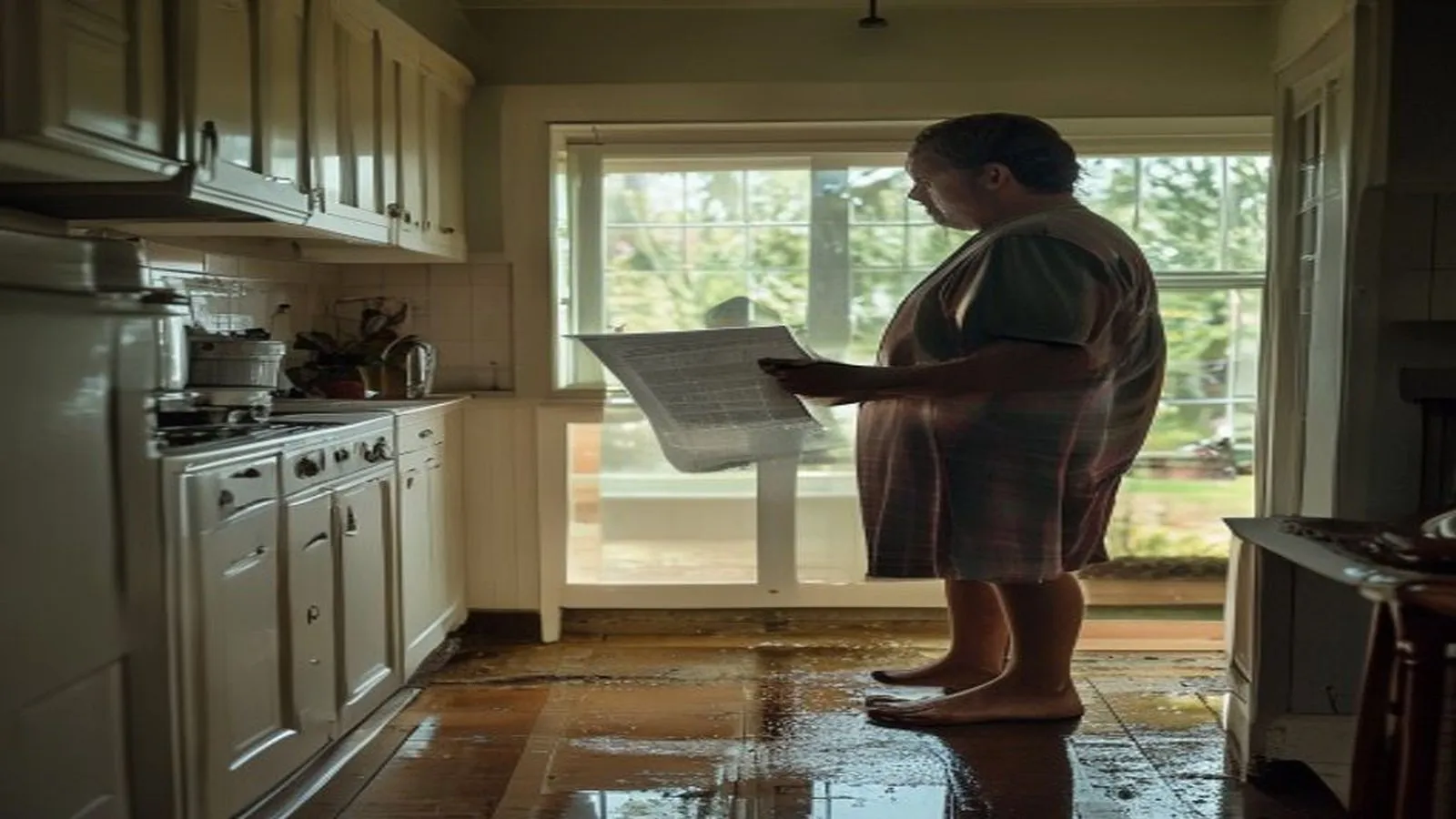
Most Missouri City homes — Sienna, Quail Valley, Lake Olympia, Riverstone — are built slab-on-grade with copper or PEX supply lines running through or below the slab. Slab leaks are common across all of these neighborhoods. They are also among the most expensive water damage scenarios because the source is often invisible until significant structural damage has already occurred.
How slab leaks happen
Supply lines under the slab carry pressurized water from the meter to fixtures throughout the house. Over decades the copper develops pinhole leaks at points where the line contacts concrete, shifts with foundation movement, or experiences turbulence at fittings. Water seeps from the pinhole, follows the path of least resistance through the slab, and eventually surfaces — sometimes in unexpected locations far from the actual leak source.
The seven warning signs
- Unexplained spike in water bill. The most reliable single indicator. A 20 to 50 percent monthly increase with no change in usage habits often traces to a slab leak.
- Hot spots on the floor. A hot-water supply line leak warms the slab above it. Walk barefoot across the floor — anywhere you feel a warm patch on a slab that should be uniform temperature is a candidate.
- Sound of running water with all fixtures off. Stand in a quiet house with everything off and listen near walls and floor. Continuous running-water sound usually means a pressurized leak somewhere in the system.
- Reduced water pressure at fixtures. Pressure loss to a single fixture is usually a clogged aerator. Pressure loss across the whole house can indicate slab leak volume loss.
- Visible water on the floor with no obvious source. Especially at the slab edges where carpet meets baseboard. Slab leaks find the lowest path out, which is usually the perimeter.
- Mildew odor with no visible mold. Slab leaks moisten subfloor and carpet pad from below. Mold develops in the pad while the carpet surface still looks dry.
- Cracking in slab-bearing walls. Long-term slab leaks soften the soil under the foundation. The first structural sign is often hairline cracks in walls directly above the leak path.
How to confirm before calling
The single best home-test for a slab leak is the meter test. Turn off every water-using appliance and fixture in the house. Check the water meter. If the dial is moving, you have an active leak somewhere in the system. Wait 30 minutes and check again. Continued movement confirms the leak.
The meter test does not tell you the leak is in the slab specifically — it could be anywhere in the system. But it confirms the leak exists, which is the prerequisite for everything else.
What to do once a slab leak is suspected
- Shut off the main water supply at the meter if the leak rate is high enough that the meter is visibly spinning. This stops the active loss while diagnostics happen.
- Call a plumber for diagnostic work. Slab leak location uses listening devices (acoustic detection) and thermal imaging to pinpoint the leak under the slab without opening the floor. Diagnostic cost runs $150 to $400 typically.
- Call your restoration company in parallel. If the leak has been active long enough to cause visible damage — wet flooring, warm spots, mold odor — restoration starts before the plumbing repair so drying timelines compress.
- Notify your insurance carrier. Slab leak repair coverage varies dramatically by policy. The sudden-discharge water damage from the leak is usually covered. The repair of the slab plumbing itself often is not.
Repair options
Three standard repair approaches:
- Spot repair. Cut the slab at the leak location, replace the affected pipe section, re-pour the slab. Cheapest if the leak is in a fixed location. Risk is that other sections of the same line fail next.
- Re-route. Abandon the slab line, run a new supply line through the attic or wall cavities to the affected fixture. Avoids future slab leaks on that branch. Cost depends on the route distance.
- Whole-home re-pipe. Replace all slab supply lines via overhead routing. The durable answer for older homes with multiple slab-leak history. Significant project — typically $4,000 to $15,000 for plumbing alone, plus restoration scope.
What the restoration scope looks like
Carpet removal in the affected zone. Carpet pad disposal. Subfloor drying with industrial air movers and LGR dehumidifiers. Daily moisture readings until materials hit equilibrium. Mold assessment if the leak has been active long enough for colonization. Final inspection and clearance documentation. Reconstruction (new carpet, baseboard, paint touch-up where needed). See our water damage restoration page for the full S500 process.
Why insurance gets complicated on slab leaks
Most Texas HO-3 policies cover sudden water damage from a leak. They typically do not cover the repair of the underlying plumbing (the slab leak fix itself). They almost never cover slab leaks discovered after long-term seepage where the loss can be characterized as gradual. The faster a leak is identified and reported, the cleaner the claim.
If you suspect a slab leak right now
Call (832) 479-4406. We can dispatch a restoration crew for assessment and coordinate with a trusted local plumber for diagnostic and repair work. Free phone consultation, free on-site assessment.
Need restoration help in Missouri City right now? Call (832) 479-4406 — live answer, 24/7. Or see our full restoration services, the rest of the blog, or the service area map.