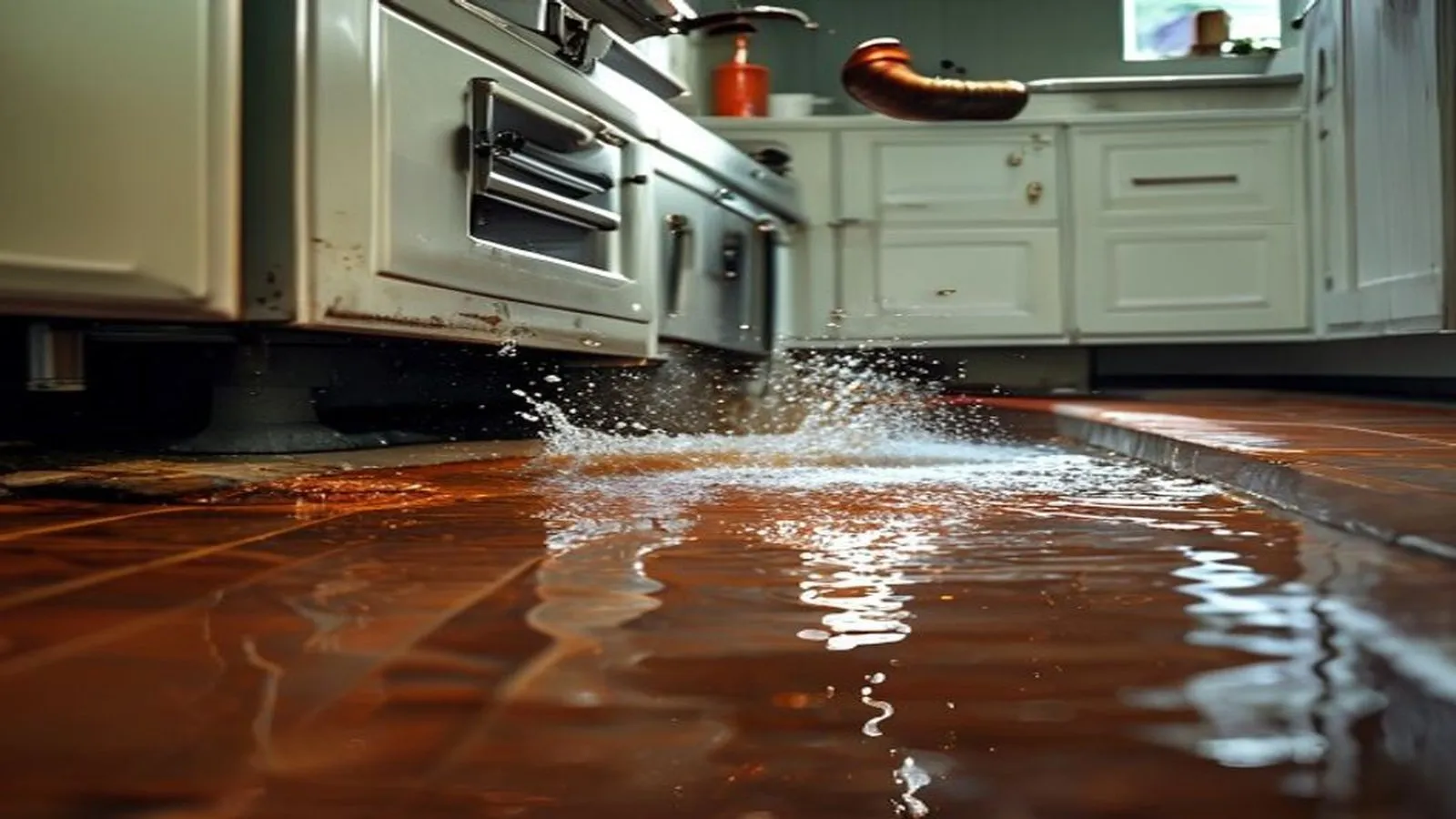
The first hour after a burst pipe is the most expensive hour of any water damage job. Stop the flow fast and you have a single-room cleanup. Wait two hours and you have wet subfloor, swollen baseboards, and the early conditions for mold germination. Here is exactly what to do, in order, before the truck arrives.
Minute 1 to 5: Shut off the water source
The single most valuable action is shutting off the water. Most homeowners panic and start mopping. Mop second, shut off first.
- Main shutoff valve. Usually at the water meter near the street curb or where the supply line enters the house. Turn clockwise to close. If the valve is corroded and will not turn, do not force it.
- Fixture stop valves. Under sinks, behind toilets, beside water heaters. Turn the small handle clockwise. Faster than the main shutoff if you can identify the source fixture.
- Water heater. If an electric heater is leaking, flip its breaker first then close its dedicated cold-water shutoff. Gas heaters: close the gas valve and the water shutoff.
Minute 5 to 15: Move what is portable
Lift box springs, dust skirts, and area rugs off wet carpet. Get electronics, photo albums, paper documents, and anything paper-based out of the wet zone. If you have a wet/dry vacuum, start pulling standing water from hard surfaces — but only if the source has been stopped. Vacuuming while the leak is still flowing wastes time you could spend stopping it.
Minute 15 to 30: Photograph everything
Wide shots first. Every room with water damage. Then close-ups of the source (the failed pipe joint, the cracked dishwasher line, the toilet supply line). Photos with timestamps establish what the damage looked like at discovery — the most important documentation an insurance adjuster will ask for. Take more than you think you need.
Minute 30 to 60: Call
Call your restoration company before you call your insurance carrier. The restoration crew can give you specific guidance about what to touch and what to leave for the adjuster, and they begin documenting moisture readings the moment they arrive — the kind of documentation that protects your claim.
For Missouri City addresses our average dispatch-to-arrival is 58 minutes. We dispatch from inside Fort Bend County so the truck is staged closer than franchise crews working out of north Houston depots. See our 24/7 emergency water extraction page for full response details, or call (832) 479-4406.
What not to do in the first hour
- Do not run the HVAC if water has reached return vents. You will distribute moisture across the entire home.
- Do not enter a flooded room with active electrical hazards. If water has reached outlets or you smell hot wiring, flip the main breaker before re-entering.
- Do not throw anything away yet. Even damaged contents need to be documented before disposal for the insurance claim.
- Do not lift wet drywall sections to "check behind." You will turn a contained leak into a wider mess and lose insurance documentation.
What insurance will and will not cover
Sudden, accidental discharge from a burst pipe is covered under almost every standard Texas HO-3 policy. Long-term seepage (a slow drip behind drywall that went undetected for months) is typically excluded. The difference comes down to whether you can show the leak started suddenly — which is exactly why first-hour photos matter so much.
For details on category determination, drying timelines, and what the IICRC S500 standard actually requires, see our water damage restoration overview. For specific guidance on slab leaks, supply-line failures, and the most common burst-pipe sources we see in Missouri City, our service hub covers each in depth.
One number, day or night
If you are reading this with active water in your home, stop reading. Call (832) 479-4406. Live phone answer, 24/7/365, 60-minute arrival across Missouri City.
Need restoration help in Missouri City right now? Call (832) 479-4406 — live answer, 24/7. Or see our full restoration services, the rest of the blog, or the service area map.