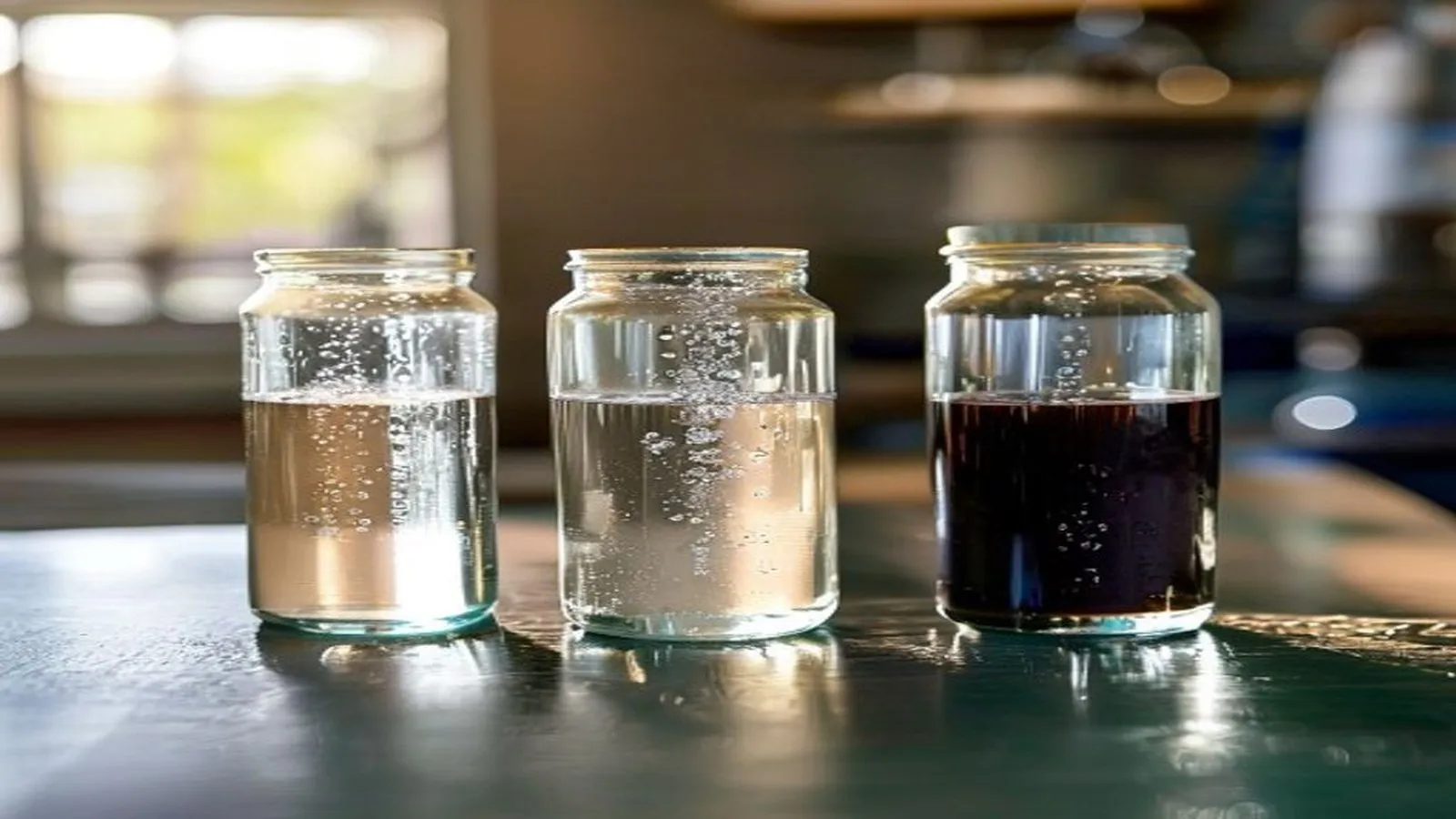
Every restoration scope starts with a category determination — Cat 1, Cat 2, or Cat 3 — because the category drives every demolition, drying, and cleanup decision that follows. Getting it wrong is the most common cause of post-loss insurance disputes in Texas. Here is what each category actually means for your home.
Category 1: clean water
Category 1 water comes from a sanitary source and does not pose substantial harm to humans on contact. Typical sources: a burst supply line, a clean refrigerator water line, a broken pipe under a sink before contamination has occurred. If extraction starts within 4 to 24 hours and the water has not contacted contaminated surfaces, Category 1 status holds.
Cat 1 jobs allow in-place drying on most materials. Carpet pad sometimes survives. Drywall typically survives. Cost is the lowest of the three categories.
Category 2: gray water
Category 2 water has significant contamination and would cause discomfort or illness on contact. Typical sources: dishwasher overflow, washing machine discharge, aquarium spills, urine from toilet bowls (without solids), water from a Cat 1 source that has been sitting more than 48 hours. The 48-hour rule is critical — what starts as Cat 1 degrades to Cat 2 quickly.
Cat 2 jobs require sanitization with EPA-registered disinfectants. Carpet pad almost always gets disposed. Drywall in the affected zone usually survives with treatment but can require flood-cuts depending on saturation depth. Cost runs 1.5x to 2x a Cat 1 job of equivalent square footage.
Category 3: black water
Category 3 water is grossly contaminated and contains pathogens, toxigens, or other harmful agents. Typical sources: sewage backup, toilet overflow with solids, rising floodwater from any outdoor source, water from any source that has been sitting more than 72 hours, and water from a Cat 2 source that has contaminated additional surfaces.
Cat 3 jobs are biohazard work. Full PPE for crews. 6-mil polyethylene containment. Negative-air machines with HEPA filtration. All porous materials in the affected zone are removed and disposed under EPA waste protocols: carpet, carpet pad, drywall (typically 24 inches above the wet line), insulation, baseboard trim, unsealed wood, upholstered furniture, mattresses, paper goods. Hard non-porous materials (glass, sealed ceramic, metal, hard plastic) can be cleaned and saved.
Why the category determination is so contested
Cat 1 work is cheaper than Cat 3 work by a large margin. Carriers occasionally push back on Cat 3 classification because the disposal scope is so much wider. The defense is documentation: when the loss occurred, when extraction began, what source produced the water, what surfaces it contacted. A written category determination logged at the first site visit, supported by photos and moisture readings, is what keeps the classification (and the resulting scope) approved.
The 48-hour and 72-hour conversion clocks
Most Texas homeowners do not realize that a Cat 1 leak left untreated becomes a Cat 2 problem at 48 hours and a Cat 3 problem at 72 hours. The water itself does not change in that time, but it picks up biological contamination from any surface it touches, and bacteria reproduces rapidly at room temperature. By 72 hours, a clean supply leak in a kitchen has effectively the same contamination load as a sewage backup of the same volume.
This is why speed matters so much on initial dispatch. The first 24 hours preserve Cat 1 status and the lowest-cost scope. Past 24 hours, the math gets worse fast.
What it means for your specific loss
Burst pipe caught in the first hour: Cat 1, in-place drying, $1,800 to $4,500 typical scope. Same burst pipe found 48 hours later: Cat 2, partial demolition, $4,500 to $9,000. Sewage backup at any duration: Cat 3, full demolition of affected porous materials, $8,000 to $25,000+. The category, more than any other factor, drives the cost.
How we determine category on every job
First site visit. Written determination before equipment is set. Photo documentation of the water source, the affected surfaces, and any contamination evidence. Moisture readings logged. The determination plus its supporting evidence goes to the carrier with the scope. If the carrier disputes the classification, the documentation usually settles the question without escalation.
For our full water damage approach, see our water damage restoration page. For Cat 3 specifics including biohazard protocols, see sewage cleanup. For any active water loss in Missouri City, call (832) 479-4406.
Need restoration help in Missouri City right now? Call (832) 479-4406 — live answer, 24/7. Or see our full restoration services, the rest of the blog, or the service area map.