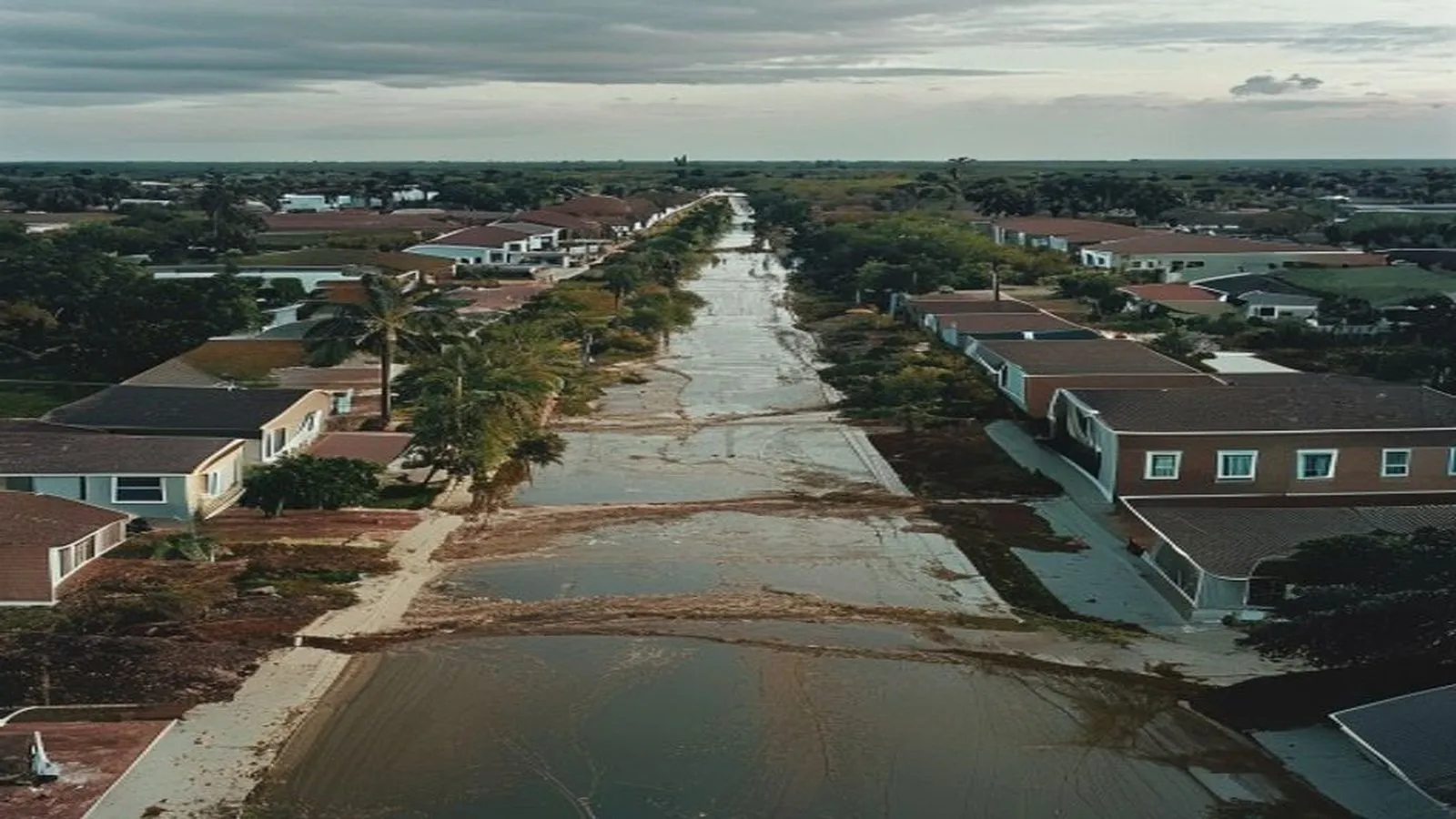
Three watersheds drain Missouri City: Brays Bayou along the northern edge, Oyster Creek bisecting the older neighborhoods, and the Brazos River along the western boundary near Riverstone and southern Sienna. Each produces a different flood pattern, carries different contamination, and triggers slightly different documentation requirements at claim time.
Brays Bayou: urban runoff dominance
Brays Bayou drains a heavily developed Houston-metro corridor before reaching the Missouri City edge. Floodwater from a Brays event typically arrives loaded with petroleum residue from roadways, lawn chemicals from upstream subdivisions, and the bulk biological load that comes with any urban runoff. Treated as IICRC Category 3 from the first hour. Drywall flood-cuts at 24 inches above the high-water line are standard and almost always non-negotiable on a properly documented claim.
Claim documentation for a Brays event should note the urban runoff classification explicitly. NFIP adjusters familiar with the Houston metro recognize Brays-source flooding immediately and will not push back on Cat 3 treatment when the source is clearly documented.
Oyster Creek: slow-rise, biological load
Oyster Creek runs through the older Missouri City sections and rises slower than Brays during sustained rainfall. The slower rise means less hydraulic damage to structures but more time for biological contamination to develop — decomposing vegetation upstream, runoff from rural septic systems, and the standing-water bacterial load that accumulates between rain events.
Documentation for an Oyster Creek event should emphasize the duration of standing water before extraction began. Mold germination on porous materials starts at 24 to 48 hours of contact with contaminated water. Carriers occasionally push back on porous-material disposal on slow-rise floods because the structural damage looks less severe. The biological contamination is what justifies the demolition scope.
Brazos River: longest standing water, river silt
Brazos River flooding affects Riverstone, parts of southern Sienna, and the western Missouri City fringe. Brazos floods rise slowly over days and recede slowly over weeks. Drying timelines run 30 to 50 percent longer than other flood sources because framing has had more time to absorb water.
The dominant contaminant in a Brazos flood is river silt, which infiltrates through structural openings that liquid water alone would not penetrate — HVAC supply boots, garage thresholds, slab penetrations, and any gap in below-grade construction. Silt residue inside ductwork is the most-missed scope item on Brazos claims; we always inspect and recommend HVAC decontamination.
FEMA elevation certification matters most for Brazos
Riverstone and the Brazos-adjacent Sienna sections sit inside FEMA flood zones AE and X-shaded. Elevation certification on the structure is a key document for any NFIP claim in these zones. Homes elevated above base flood elevation receive different claim treatment than slab-on-grade builds at grade. If you do not have your elevation certificate on file, your NFIP carrier or local floodplain manager can provide one.
Documentation by source — the practical checklist
- All three watersheds: pre-mitigation photos, high-water-line marks, contamination evidence, daily moisture logs, Xactimate-formatted estimate.
- Brays Bayou specifically: urban runoff classification noted in scope, petroleum residue documentation if visible.
- Oyster Creek specifically: standing-water duration log, biological contamination notes, mold-risk assessment within first 48 hours.
- Brazos River specifically: elevation certificate, HVAC inspection report, silt infiltration documentation through structural penetrations.
Timing matters — and Texas timing is short
The NFIP claim filing window from FEMA is 60 days from the date of loss for the proof of loss form. Private flood policies typically allow one year. Either way, do not wait. For source-specific guidance and our full flood response protocol, see our flood damage restoration page.
Crew already inside Fort Bend
For active flood response in Missouri City — Brays, Oyster Creek, Brazos, or any other source — call (832) 479-4406. Our trucks stage inside Fort Bend County so we are running while franchise crews are still routing from the Beltway.
Need restoration help in Missouri City right now? Call (832) 479-4406 — live answer, 24/7. Or see our full restoration services, the rest of the blog, or the service area map.