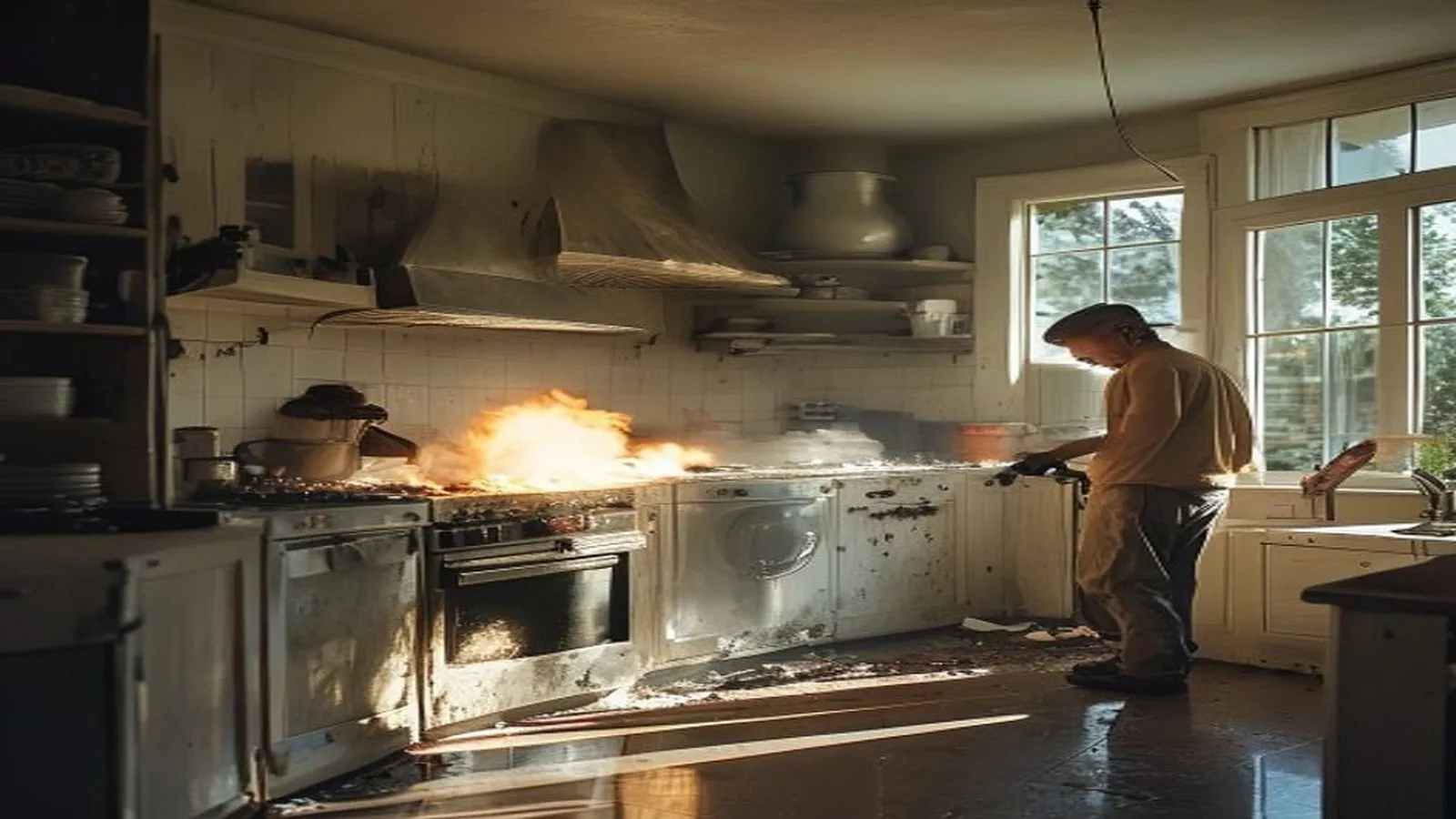
A residential kitchen fire is usually small enough that the fire department clears the structure within an hour. The hard work starts after that. Smoke and soot residue are spreading via HVAC. Firefighting water is saturating the floor below the fire room. Odor is bonding to porous surfaces. The first 24 hours after the fire is out determine how much of your home survives.
The first hour after the fire department clears the structure
- Do not re-enter immediately unless cleared by the fire department. Structural integrity, electrical hazard, and toxic combustion gases all need to be evaluated before re-entry is safe.
- Do not run the HVAC. Even if power is restored, running the air handler distributes soot from the affected zone into every duct in the house. Confirm with the fire department or your restoration company that it is safe to power on systems.
- Photograph the exterior and the visible interior damage from outside the home before anything is touched.
- Call your insurance carrier to file the claim and request the adjuster assignment. Most carriers respond within 24 to 48 hours on fire losses.
- Call your restoration company. Mitigation work needs to start fast — the longer smoke residue sits, the more permanent the damage. See our fire and smoke damage page for the full response.
The first 24 hours — what gets done
Properly staffed fire mitigation starts with these actions inside the first day:
- Board-up of any breached structural openings. Windows broken by fire department access, doors removed, roof vent openings. Securing the structure is the first scope item.
- Water extraction from firefighting operations. Standing water is removed within the first few hours so secondary water damage and mold risk are minimized.
- Initial soot containment. Plastic barriers around the most heavily affected zones to limit soot migration via natural air currents.
- HVAC inspection and sealing. Vents in affected areas sealed off so the system can be turned on later for partial environmental control without spreading contamination.
- Contents triage. Hard, non-porous items identified as candidates for pack-out and off-site cleaning. Visibly destroyed items photographed and documented.
- Initial odor neutralization. Hydroxyl generators or ozone equipment (depending on the situation and occupancy) start running to break down odor compounds in the air.
What survives and what does not
The honest assessment in the first 24 hours is what gets kept and what gets disposed:
- Salvageable usually: hard wood furniture, glass, metal, sealed ceramic, hard plastic. These can be ultrasonically cleaned off-site through our pack-out service.
- Salvageable sometimes: upholstered furniture, area rugs, and bedding depending on smoke type and contact duration.
- Almost never salvageable: food (anything not in a sealed metal can), open cosmetics, mattresses with significant smoke exposure, items adjacent to the fire source.
- Always disposed: insulation, drywall directly above the fire, carpet and pad with smoke or water saturation, HVAC filters, and anything touched by Cat 3 firefighting water that has been sitting more than 48 hours.
Why ALE coverage matters in the first 24 hours
Most fire jobs require the homeowner to move out for 2 to 8 weeks during reconstruction. Additional Living Expenses (ALE) coverage on a standard HO-3 policy pays for temporary housing, food differential while you are out of your home, and pet boarding when needed. Activate it early. The carrier will need a written estimate from the restoration company on expected timeline, and we provide that within the first 24 hours so the ALE clock starts immediately.
The HVAC system needs decontamination, not just inspection
Running the HVAC system after a fire without first decontaminating it spreads soot to every room. Supply boots, the evaporator coil, the blower wheel, and the entire run of flex or metal duct hold deposits that aerosolize the moment air moves. Full HVAC decontamination is standard scope on any fire restoration job we run.
Odor neutralization is a real process, not air freshener
Smoke odor lives on surfaces (cleaned), in porous materials (some replaced), and in air-handler systems (decontaminated). Lasting odor neutralization combines hydroxyl or ozone treatment to destroy odor compounds molecularly, sealing of any remaining surfaces that absorbed odor, and repainting where the underlying surface still holds residual contamination. Surface deodorants and air fresheners mask odor temporarily and almost always fail at the four-week mark.
Call early, document continuously
If your Missouri City home had a fire today, call (832) 479-4406. FSRT-certified crew, full S700 protocol, direct ALE coordination with your carrier. The first 24 hours decide how much of your home you get to keep.
Need restoration help in Missouri City right now? Call (832) 479-4406 — live answer, 24/7. Or see our full restoration services, the rest of the blog, or the service area map.